
When people hear Google Ads, they usually picture text ads on a search page.
That’s the classic Search campaign setup.
But Performance Max works in a bigger way than that.
It launched in late 2021 and quickly took off.
Now, more than half of advertisers are putting over half their budget into it.
That’s because it works differently to Search… and brings a fresh edge.
Even better, it leans on AI to do most of the work for you.
So let’s look at how Performance Max campaigns work, and the key differences that set them apart from Search.
How do Performance Max campaigns work? 5 things they pull off that search can’t
#1 — PMAX reaches more people across channels
Search campaigns only show ads when someone is actively searching.
That means you only catch people at the exact moment they’re looking to buy.
Performance Max goes broader.
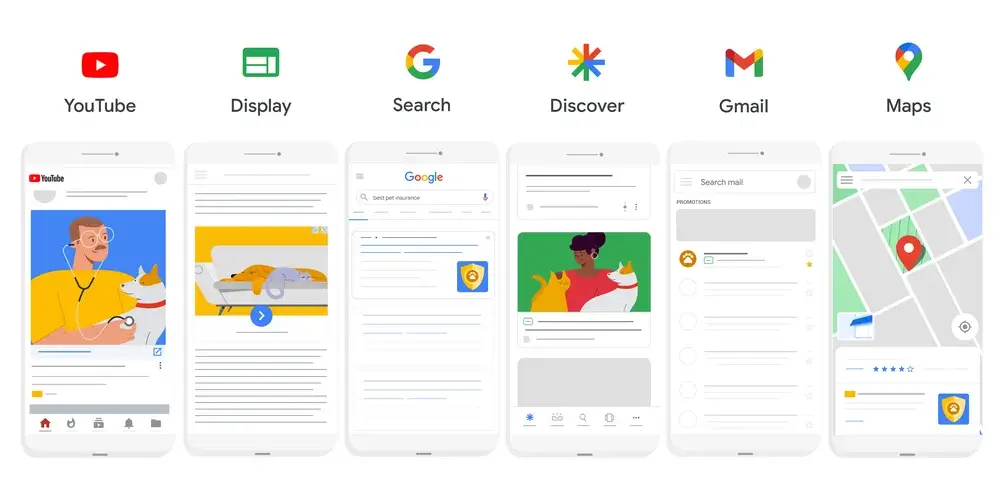
Your ads can show on YouTube, Gmail, Discover, and more.
It reaches people at different stages of their journey… not just when they type in a keyword.
Instead of waiting for someone to search, PMax puts your ads in front of them across Google’s network.
It boosts visibility by showing up where people are most likely to notice.
That could be on a search page.
Or in a YouTube video.
Even in their inbox.
AI handles the placement and adjusts in real time to drive more conversions.
#2 — You set goals and let AI do the rest
Search campaigns need a lot of manual work.
You research keywords for your ads.
You set bids.
You also need to tweak things as performance changes.
Performance Max takes that off your plate.
You don’t choose keywords or placements in the same way.
AI decides where your ads go.
It also sets how much to bid.
And it keeps adjusting in real time based on what’s working.
Let’s say someone’s browsing YouTube and looks like a strong lead.
PMax can automatically bid more to reach them.
That said, you still have some control.
You still write your ad copy.
If you run eCommerce, for example, you can place products in listing groups.
But most of the work is handled by AI.
That’s why PMax is easier if you don’t want to spend hours on keywords and bids.
It sometimes picks up on things you wouldn’t catch manually.
#3 — Guide AI with audience signals
With Search campaigns, you pick keywords and layer on targeting like age or location.
Performance Max works differently.
It leans on AI, and you guide it with signals instead of hard rules.
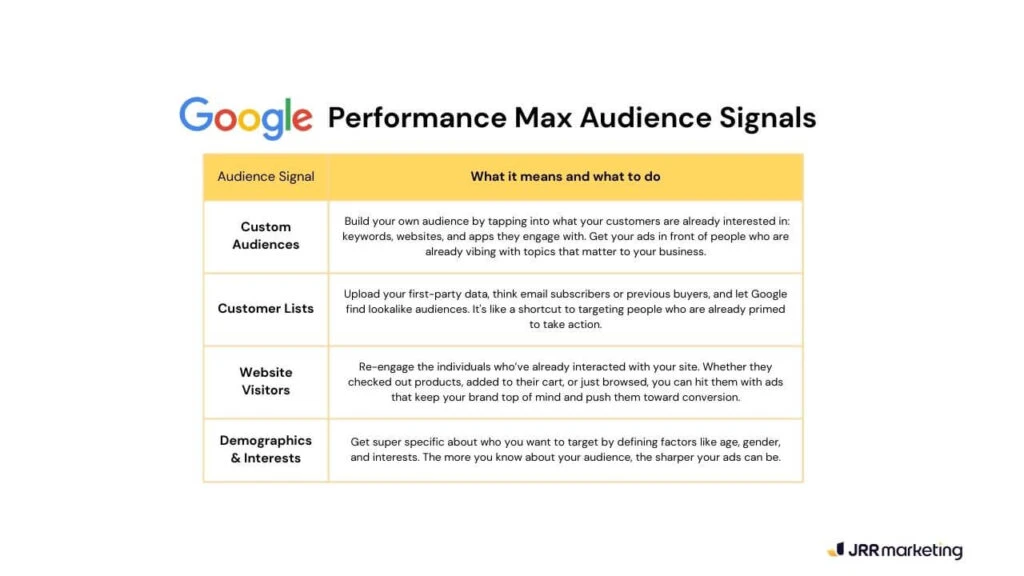
Audience signals tell the system who you think your buyers are.
The AI then uses those hints to find more people like them.
You still get plenty of control here.
You can upload customer lists, like people who’ve already bought from you.
You can use first-party data from past purchases or website visits.
That helps PMax focus on people who are more likely to convert.
You can also add search themes… up to 25 per asset group.
These are short phrases linked to your products, and they act like clues for the AI.
They don’t work exactly like keywords, but they steer the system towards the right queries.
It helps if your search themes are broad enough for Google to work with.
But also make sure they’re still specific enough to stay relevant.
Don’t forget to update signals when you roll out something new.
Remember to do this when you go after a different audience.
Or if you launch a new asset group for a new product.
This way, PMax learns faster and targets better, without you having to micromanage.
 ad spend with dollar icons and growth chart. example of how do performance max campaigns work to drive measurable business results.">
#4 — You get to use more creative assets
Search is simple.
You write a text ad and it shows when someone types your keywords.
Performance Max is different.
You upload assets… headlines, descriptions, images, logos, and videos.
Google’s AI mixes them into ads.
Then, it runs them across Search, YouTube, Display, Gmail, Discover, and Maps.
Even better, it tests different combinations to see what works best.
So, the ad someone sees on YouTube will look nothing like the one they see in Gmail.
Here’s how to get the most out of it.
- Upload at least five headlines and five images. The more variety, the better the testing.
- Always add video. If you don’t, Google will make one for you (and it usually looks bad).
- Keep your assets on-brand because the AI can mix any of them together.
- Check the asset report. It’ll show if something is “low,” “good,” or “best.” Swap the weak stuff out, but don’t change things too often or you’ll reset learning.
- Refresh your assets every few months so your ads don’t go stale.
The trade-off’s specific.
You save time… but you lose some control.
So make sure every asset you upload is good enough to stand alone.
#5 — reporting is getting better, but still limited
Performance Max has always kept reporting pretty broad.
You could see how your campaign was doing.
You can check which asset groups worked.
But you couldn’t see the details.
No breakdown of platforms, placements, or search terms.
That’s been one of the biggest frustrations with PMax.
Now Google’s starting to fix it.
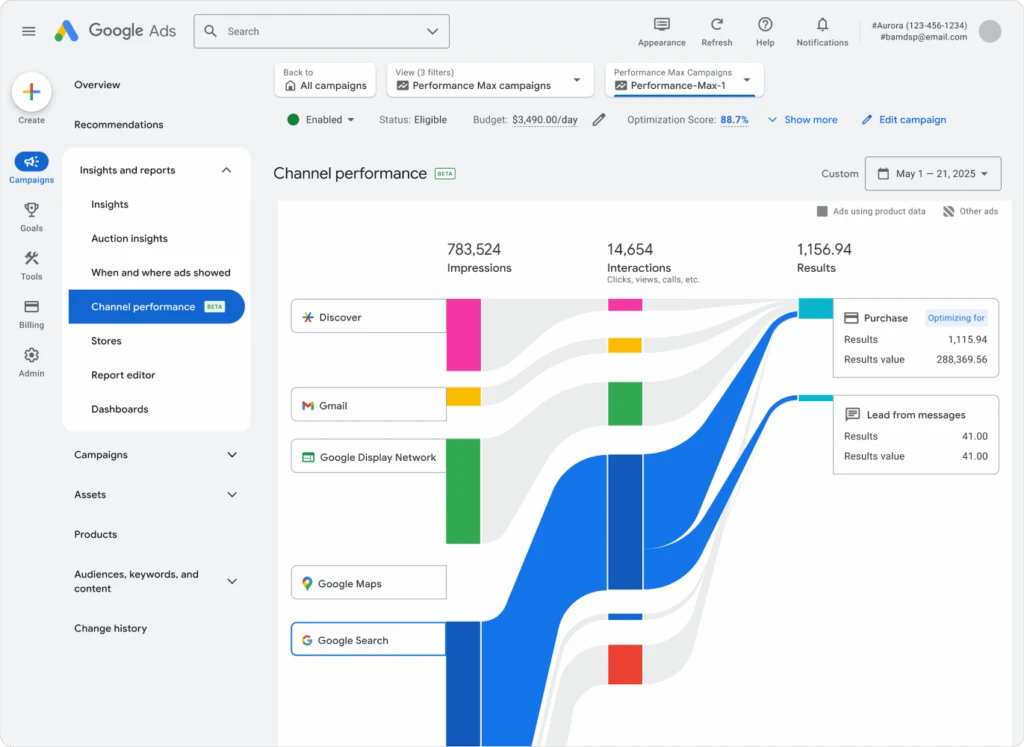
They’ve rolled out channel performance reporting.
This shows how your ads are performing across placements.
You’ll also see charts and tables with clicks, conversions, cost, and value by channel.
It’s not as detailed as Search campaign reporting, but it’s a step forward.
You still don’t get full placement transparency.
But you finally know which channels are pulling their weight.
Check channel performance once a week.
That’s how you catch any weak spots before they eat up your budget.
And don’t skip the diagnostics report.
It’ll point out missing assets or creatives that aren’t working.
If you want precision, Search campaigns still win.
But if you’re fine with a bigger-picture view, PMax reporting is starting to get a lot more useful.
So, which campaign type should you use?
Deciding on Search vs PMax really depends on what matters more to you: control, scale, or budget.
Here’s a quick guide to help you decide.
Choose Search if…
- You’ve got a smaller budget.
- You want full visibility into keywords and spend.
- You like adjusting things manually.
- Your goal is to capture high-intent traffic.
Choose Performance Max if…
- You’ve got budget to scale.
- You want automation to handle bids, targeting, and placements.
- You’re looking to reach people across multiple Google channels.
- Your goal is to find new customers and grow demand.
The best approach is often a mix of both.
Use Search to catch people who are already looking for what you sell.
Then run PMax to reach new audiences and scale beyond search results.
Just keep an eye on the leads that come in.
PMax can get you more conversions.
But sometimes the quality isn’t great or the fit is off.
Like any campaign type, it needs monitoring.
Check performance often, and be ready to act quickly so you’re not wasting money on the wrong clicks.